

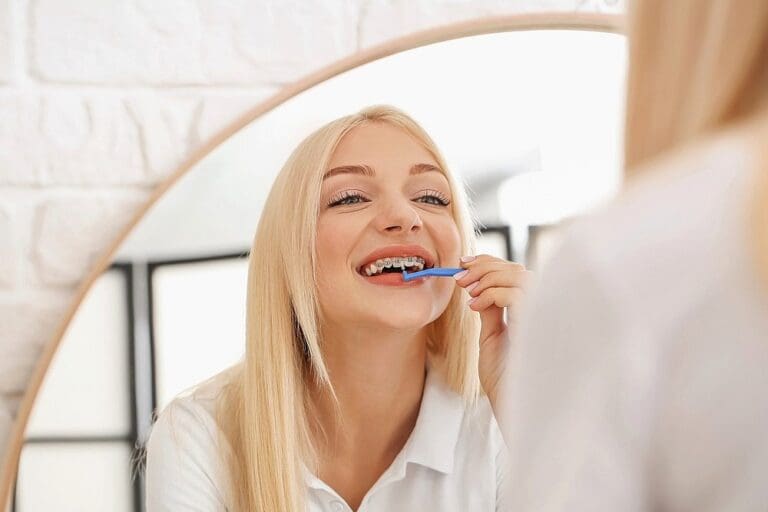
A step-by-step guide to the tools, technique, and daily habits that keep your teeth and gums healthy while your braces do their work.
Flossing with braces takes more patience than flossing without them, but it is one of the simplest ways to protect your gums and enamel while your teeth move.
If yout want to know how to floss with braces, use a floss threader or orthodontic floss to get beneath the archwire, then clean both sides of each tooth with a gentle C-shaped motion.
Floss every day. It takes longer than flossing without braces, but it removes the plaque and food that brackets and wires trap, which protects your gums and enamel.
Brackets and wires create tiny spots where food and plaque build up when they are not cleaned properly. Left alone, that buildup can lead to gum disease, tooth decay, and bad breath.
At Paige Orthodontics in Kingwood, TX, board-certified orthodontist Dr. Sebastian Paige and the team educate patients on flossing with hands-on lessons and send patients home with hygiene kits, so the habit feels manageable from the very start.
What follows covers why flossing matters, the tools that make it easier, a step-by-step guide, and fixes for the most common problems.
Why Flossing Matters with Braces
Braces are great for fixing your smile, but they can make cleaning harder. Brackets and wires leave small spaces where food and plaque collect, and a toothbrush alone can’t reach everywhere. Flossing removes plaque and food particles from those hard to reach spots and helps keep your teeth, gums, and braces clean.
Regular flossing also supports good enamel health and prevents buildup from forming around brackets. Leaving plaque on your teeth too long can leave permanent white spots once your braces come off, so think of flossing as a daily habit that helps your braces do their job and leaves your smile in better shape at the finish line.
Tools That Make Flossing with Braces Easier
Floss Threaders
A floss threader guides floss under your archwire. It is a good fit for tight spaces around brackets and wires. Paige Orthodontics recommends mastering your flossing routine early, because it is one of the best practices for your teeth and gums during treatment.
Water Flossers
A water flosser sends a stream of water between your teeth and around your wires to clear away plaque and food particles. It is gentle and especially useful for inflamed gums. According to Dr. Sam Elkenawy, a board-certified orthodontist at Elara Orthodontics in Houston and Richmond, TX, water flossers are especially helpful for patients with sensitive gums or who prefer a quick cleaning option.
Orthodontic Floss
Orthodontic floss is thicker and stiffer than regular floss, which makes it easier to handle between brackets and archwires. Pair it with a floss threader for better results. It also helps you clean close to the gumline, where bacteria often hide.
Superfloss
Superfloss is spongy and made for braces. It cleans around wires, along the gumline, and in other hard-to-reach areas, and it is also useful for cleaning around retainers or bridges after treatment.
Floss Picks and Interdental Brushes
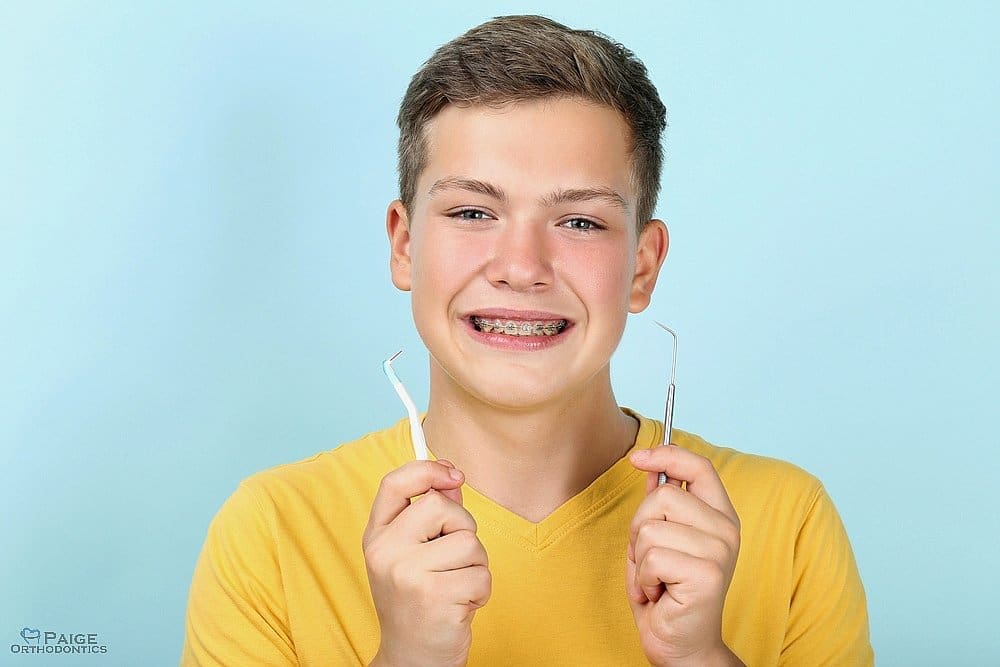
Floss picks and interdental (proxy) brushes remove plaque and trapped food quickly, and they work well under wires and along the gumline. Avoid rough sawing motions, which can irritate your gums.
Where to Get Flossing Tools
You can find floss threaders, water flossers, orthodontic floss, and other tools at local pharmacies and online stores in Kingwood. Paige Orthodontics also provides tools in braces care kits for new patients.
Flossing Tools at a Glance
| Tool | What It Does | Good to Know |
| Floss threader | Guides floss under the archwire | Reaches tight spaces around brackets and wires |
| Water flosser | Rinses between teeth and around wires with water | Gentle and helpful for inflamed gums |
| Orthodontic floss | Thicker, stiffer floss | Easier between brackets and archwires, pairs well with a threader |
| Superfloss | Spongy floss made for braces | Cleans around wires and gumlines, also useful around retainers |
| Floss picks and interdental brushes | Quickly remove plaque and trapped food | Avoid rough sawing motions |
Step-by-Step Guide to Flossing with Braces
Step 1: Brushing
Brush with a soft-bristle toothbrush and fluoride toothpaste. Use small circular motions around the brackets and wires.
Step 2a: Guide the Floss Under the Wire
Cut about 18 inches of dental floss. Thread it through a floss threader and guide it under the archwire between two teeth. Waxed floss slides more smoothly and is less likely to fray. Make a “C” shape around each tooth with the floss. Gently move the floss up and down along the sides of the tooth and along the gumline, and be gentle near your gums to avoid soreness or bleeding. Focus on one space at a time so you do not miss any food or plaque.
Step 2b: Try a Water Flosser
If string floss is not your preference, use a water flosser instead. Spray between each tooth, around the brackets, and along the gumline to clear away food, bacteria, and plaque. Adjust the water pressure to a comfortable level.
Step 3: Finish with Mouthwash:
Brushing and flossing together give you a complete clean. For an extra fresh clean, rinse with mouthwash to help kill remaining bacteria.
Flossing Tips for Different Types of Braces
Your flossing steps can vary a little depending on the type of braces you wear:
- Metal braces: Use floss threaders to clean under the archwires.
- Clear ceramic braces: Clean them just as you would metal braces.
- Lingual braces: These sit behind your teeth, so a water flosser may work best.
- Self-ligating braces: Clean them just as you would metal braces.
- Invisalign: No special flossing method is needed. Clean your teeth as you normally would.
Caring for Your Smile After Braces
Good oral hygiene still matters once your braces come off.
- Wear your retainer. Retainers keep your teeth in place, so follow your orthodontist’s care plan.
- Keep flossing daily. Plaque and tartar can build up between teeth even after braces, so flossing remains key.
- Visit your dentist regularly. Checkups every six months help protect your enamel, gumline, and overall oral health.
When Your Flossing Method Is Not Working
Sensitive Gums
If you have not flossed regularly in a while, your gums may bleed a little as they get properly cleaned. Rinse with salt water or mouthwash, switch to a soft toothbrush on and around the gumline, and keep flossing. Over time your gums will get stronger and bleed less. Bleeding can be a sign of inflammation due to bacteria so cleaning regularly can actually stop bleeding long term.
Tight Spaces
Some areas are hard to reach with regular floss. Use interdental brushes or a Waterpik for effective cleaning, and try a warm saltwater or mouthwash. If you still have trouble, ask your dentist or orthodontist for advice.
Flossing Takes Too Long
If string floss feels like too much work, try floss picks, Superfloss, or harp flosser devices. They simplify the process and save time, and it is fine to switch tools until you find what works. The goal is to clean daily and your orthodontist can show you quick techniques at your next visit.
What This Guide Cannot Replace
This guide covers the general steps and tools, but it cannot see your braces or your gums. How your teeth and wires are set up affects which tool works best, and only an in-person hands-on lesson can show you the right technique for your mouth. If you are not sure whether your routine is working, you can schedule an appointment at Paige Orthodontics in Kingwood and ask for a hands-on lesson.
How Paige Orthodontics Helps You Build the Habit
The Paige Orthodontics team offers tools, tips, and guidance to make flossing easier:
- Hands-on lessons for flossing techniques
- Starter kits with useful hygiene extras like floss threaders and Superfloss
- Ongoing orthodontic support and feedback on your dental hygiene.
FAQs: Flossing with Braces
Can I skip a day of flossing with braces?
It might seem tempting to skip flossing with all the wires and brackets, but daily flossing is essential. It removes food and plaque from hard-to-reach areas and keeps your gums healthy. Skipping flossing can leave buildup that may lead to whitespots, cavities, or gum problems long term.
What happens if you brush your teeth for less than 2 minutes?
Brushing for under two minutes is not in itself a problem, as long as you have not left plaque in any hard-to-reach areas. Missed spots make your cleaning less effective and raise your risk of cavities and gum disease. For the best results, it is best to be thorough and even clean each area twice rather than skipping an area for the sake of saving time..
What happens if I do not brush my teeth every day with braces?
Skipping daily brushing, with or without braces, lets food and plaque collect on your teeth. Over time this can cause white spots, bad breath, cavities, and gum disease. Plaque that stays on your teeth too long can form a hard shell (calculus) that only your dentist should remove.
What is the best floss for braces?
The best option is the one you will use every day. Floss threaders paired with waxed floss, orthodontic floss, and Superfloss all work well for getting under the archwire. A water flosser is a gentle choice for sensitive or inflamed gums, and floss picks or interdental brushes are quick options for trapped food.
Do I still need to floss after my braces come off?
Yes. Plaque builds up even without braces, so daily flossing remains key. Wear your retainer as directed and keep up your dental checkups every six months to protect your enamel and gums.
Sources. Patient education content based on general information about flossing and oral hygiene with braces, combined with clinical and procedural details specific to Paige Orthodontics, Kingwood, TX. Individual routines and tool recommendations should be confirmed with your orthodontist.
Related Reading
Need Hands-On Help Flossing with Braces?
At Paige Orthodontics in Kingwood, TX, Dr. Sebastian Paige and the team will look at your braces, show you the flossing tools and technique that fit your teeth, and answer your questions.
Schedule Your Free Consultation
Free consultation for new patients.