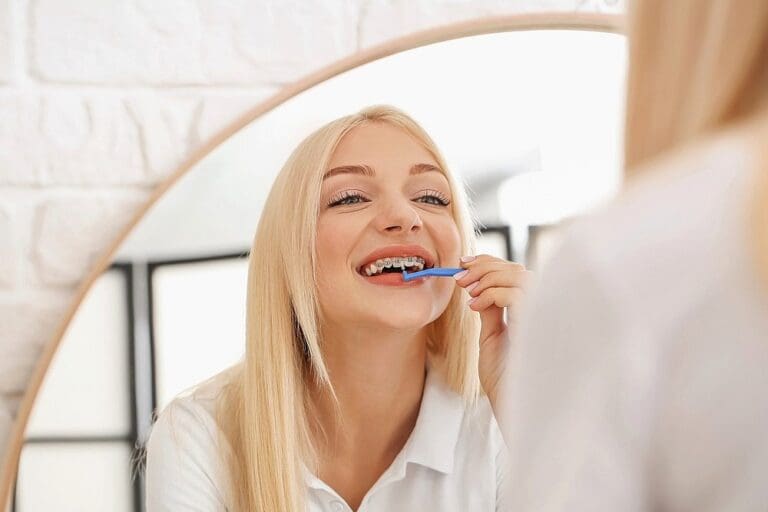


Why leftover adhesive needs professional polishing, what to avoid at home, and what to expect at your Paige Orthodontics appointment.
After brackets alone are removed, it is normal to see a thin layer of leftover adhesive on your teeth that your orthodontist will remove. It can be tempting to scrape it away yourself, but that glue was built to last, and the safest way to remove it is with the right instruments in an orthodontist’s hands.
The safest way if you want to know how to get braces glue off teeth is to let your orthodontist polish it away. Special polishing tools and adhesive removers lift the glue without harming your enamel, leaving each tooth smooth and clean.
Scraping, harsh chemicals, and home remedies can scratch enamel, irritate your gums, and damage fillings, so they are best avoided.
Braces glue is designed to stay put through chewing, talking, and cleaning. That same strength is why a thin layer of adhesive usually remains on the enamel after the brackets come off.
At Paige Orthodontics in Kingwood, TX, board-certified orthodontist Dr. Sebastian Paige and the team remove adhesive with professional polishing instruments and careful technique, protecting your enamel at every step. The team is also happy to remove braces and adhesive for patients who were treated elsewhere.

What Is Braces Glue (Orthodontic Adhesive)?
Braces glue, also called orthodontic adhesive, is a material that keeps your brackets stuck to your teeth. It helps your braces work throughout treatment by staying put, and it is made to handle daily chewing of soft foods, talking, and cleaning without coming loose.
When your braces are ready to come off, your orthodontist uses gentle, enamel-safe tools to remove the adhesive. You teeth are harder and stronger than the orthodontic glue. Polishing and buffing instruments are made to protect your enamel, and a dental professional knows how to use them so the surface of each tooth is left smooth and clean.
Why Glue Removal Is So Hard
Braces glue is made to be strong so your brackets stay firmly in place, but that same strength makes adhesive removal from someone without experience a challenge. After the brackets alone are removed, a thin layer of glue usually remains on the tooth. Trying to remove it at home is not wise, since you could accidentally cut or poke yourself in the process. At Paige Orthodontics, we use professional tools and careful techniques to remove the adhesive safely while protecting your tooth surface at every step. Even if you were not a patient of ours, we are able to safely remove your braces and adhesive, as well as make retainers to keep your teeth in place.
Why Not Remove Braces Glue at Home?
It may be tempting to pick or scrape at the leftover glue, but please do not. DIY glue removal can harm your teeth and gums.
Tooth Enamel Damage
Household metal tools like knives, needles, or scissors can scratch your teeth and gums. That can lead to tooth sensitivity, pain, and a higher chance of cavities. Orthodontists often see enamel and gum damage from these tools, so it is best to call a professional instead.
Leftover Glue
Home solutions often fail to get rid of all the glue and can harm you in the process. It is best to leave glue removal to your orthodontic office. Rough surfaces can lead to areas that trap bacteria.
Increased Sensitivity
Harsh chemicals or scrubbing your teeth too hard, such as with baking soda paste or rough brushes, can irritate your gums. They may also make your teeth more sensitive to hot or cold foods and drinks.
Unproven Home Remedies
Some people try lemon juice, vinegar, or strong cleaning agents. These are not safe for teeth and can wear away enamel. Using them can also irritate your gums and create long-term sensitivity.
Higher Risk for Broken Teeth or Fillings
DIY methods put your teeth, fillings, and other dental work at risk. Scraping or pulling at glue can loosen restorations or crack the tooth surface. Professional care is always the safest option to avoid these injuries.
Common Mistakes to Avoid During Glue Removal
Even after reading about the risks, some people still try these methods. Please avoid these mistakes:
- Never use sharp tools like scissors, needles, or metal picks.
- Avoid all harsh chemicals, such as lemon juice, vinegar, or undiluted baking soda..
- Do not scrub too hard or too long.
How Do Professionals Remove Braces Glue?
At Paige Orthodontics, the glue removal process is safe and gentle. Your orthodontist uses special instruments to remove the glue without harming your enamel and then polishes the tooth to smooth the surface. According to Dr. Marty Greenberg, an ABO board-eligible orthodontist at Bold Bite Orthodontics in Jacksonville, FL, this extra step makes sure your teeth are left smooth and free from rough spots.
These professional techniques remove adhesive thoroughly while keeping your teeth protected. The procedure does not hurt. When it is done, your teeth will feel smooth, clean, and free of leftover glue.
Professional Removal vs. DIY at a Glance
| Factor | Professional Removal | DIY at Home |
| Instruments | Polishing instruments and adhesive removers | Knives, needles, scissors, rough brushes, or household products |
| Enamel | Protected throughout the process | Can scratch teeth and gums, and lemon juice or vinegar can wear away enamel |
| Leftover glue | Smooth, clean finish | Often leaves residue behind |
| Sensitivity | Mild pressure or vibration | Can cause pain, irritated gums, and long-term sensitivity |
| Fillings and dental work | Protected | Can loosen restorations or crack the tooth surface |
What to Do After Glue Removal
After your appointment, your teeth may feel a bit odd, but this is normal. These post-care tips help keep your teeth strong and healthy.
Brush and Floss Gently
Use a soft-bristle toothbrush and fluoride toothpaste. Brush twice a day, especially after meals, and floss at least once daily. If flossing is tough, try a water flosser, which is good for cleaning around the gums and between teeth.
Rinse with Saltwater
A saltwater rinse can help if your gums feel a bit sore. Mix half a teaspoon of salt into a cup of warm water and swish it around your mouth for half a minute. Do this twice a day, as needed.
Use Mouthwash with Fluoride
A fluoride mouthwash offers added enamel protection and helps keep your teeth smooth, less sensitive, and safe from plaque. Use it once a day after brushing.
Tips for Keeping Your Teeth Healthy
These easy habits support long-term oral health once your braces and adhesive are gone:
- Stick to routine care: Brush and floss every day, and use fluoride toothpaste and mouthwash to keep enamel strong.
- Eat smart: Choose healthy foods like leafy greens, yogurt, or cheese, and avoid sticky candies or sugary snacks that can cling to or harm your teeth.
- Visit your dentist regularly: Schedule routine cleanings and checkups every six months.
- Protect your teeth: Wear a mouth guard if you play sports, and follow all of your orthodontist’s advice.
When Home Removal Is Especially Risky
Home removal is a poor fit for anyone, but a few situations make it riskier. If you have fillings, crowns, or other dental work, scraping or pulling at glue can loosen restorations or crack the tooth surface. If your teeth are already sensitive, especially to cold drinks, rubbing or scrubbing at leftover glue can make that sensitivity worse. And if you notice rough spots, sensitivity, or leftover glue after your appointment, do not work on it yourself. Call the office so the team can check and smooth the area.
What This Guide Cannot Tell You
This guide explains why professional polishing is the safest approach, but it cannot see your teeth or tell you how much adhesive is left on them. Only an in-person visit can confirm that every bit of glue is gone and your enamel is smooth. If you are unsure about the leftover adhesive on your teeth, you can schedule an appointment with Paige Orthodontics in Kingwood, TX. The team is happy to remove your braces and adhesive whether or not you are a current patient. We are also happy to make you retainers to keep your smiling looking great for a lifetime.
What to Expect at Your Paige Orthodontics Appointment
Here is how the process works at our Kingwood, TX office. Our team follows a gentle, step-by-step method to protect your enamel, using safe polishing instruments that remove adhesive without discomfort.
Before Your Appointment
Brush and floss before your visit, and try to avoid sticky or hard foods the day before. It also helps to write down any questions or concerns you have about the glue removal process so you can discuss them during your appointment.
During the Appointment
Your orthodontist will walk you through each step of the removal process, which usually takes about 45 minutes. Polishing instruments remove the glue without harming your enamel, and most people find the procedure quick, easy, and very comfortable.
After the Appointment
Our team will give you simple post-care steps to follow. Brush like normal using a toothbrush and fluoride toothpaste. If you notice any rough spots, sensitivity, or leftover glue, call our office so we can check and smooth the area.
Dr. Sebastian Paige is a board-certified orthodontist who supports patients at every step, from the first consultation to the final smile. Whether you completed your braces treatment with us or switched from another clinic, we are committed to a kind, detailed, and stress-free experience. We are happy to remove braces and make retainers for patients who were treated elsewhere.
FAQs: Braces Glue Removal
How permanent is dental glue?
Dental glue for braces is not permanent, but it is very strong and meant to last for your entire treatment. It holds brackets firmly in place through eating and brushing. Once your braces come off, your orthodontist removes the glue safely with polishing instruments.
Does getting braces glue removed hurt?
Removing braces glue does not hurt. You may feel light pressure or vibration from the polishing tools, but the process is gentle and does not damage enamel. Most patients find it quick and comfortable. Please let your orthodontist know if you are very sensitive to cold liquids, since we can take steps to make the process more comfortable for you.
Does sugar dissolve braces glue?
No, sugar cannot dissolve braces glue. The adhesive is made to withstand food, drinks, and daily wear. Sugar can actually cause more problems by increasing plaque and cavity risk, so it is important to clean well, especially around your brackets.
How long does braces glue removal take?
The removal process usually takes about 45 minutes and uses polishing instruments to remove the glue without harming your enamel. Most patients find the procedure quick, easy, and comfortable.
Can Paige Orthodontics remove braces that were put on elsewhere?
Yes. Paige Orthodontics is happy to remove braces and adhesive, and to make retainers, for patients who were treated elsewhere.
Sources. Patient education content based on general information about orthodontic adhesive and braces removal, combined with clinical and procedural details specific to Paige Orthodontics, Kingwood, TX. Individual timelines and aftercare should be confirmed with your orthodontist.

Related Reading
- How Long Do Braces Take in Kingwood, TX: What to Expect
- Fix Underbites Non-Surgically with Reverse Pull Headgear and Braces in Kingwood, TX
Ready for a Smooth, Glue-Free Smile?
At Paige Orthodontics in Kingwood, TX, Dr. Sebastian Paige and the team will review your teeth, explain how adhesive removal works, and answer your questions about your braces removal appointment.
Schedule Your Free Consultation
Free consultation for new patients.